
The Commerce Commission’s latest telecommunications monitoring report has LEO back in the news. Less talked about is a large band of radio spectrum sitting idle while the operators who could use it wait on a regulatory step that the rest of the world took years ago.
That band is 6 GHz. Here is what it could do for rural connectivity, how other countries switched it on, and why New Zealand still hasn’t.
I should say upfront, as the author, that I am not a neutral party here. I run WombatNET, a local internet provider operating networks in the hills and valleys of rural Wellington. If the 6 GHz band were opened for outdoor use tomorrow, we would use it, and the communities we exist to serve would be better off as a result. So read what follows as the view of someone with a stake in the outcome. Regardless, the facts do not change.
In the Herald’s coverage today, the owners of Primo in Taranaki and Full Flavour in the Central Plateau made a point that the industry has quietly raised for years. Overseas, wireless operators use bands like 3 GHz and 6 GHz to deliver fixed wireless broadband that holds its own against fibre. Here, the small wireless internet service providers, the WISPs, have not been given the same tools. As one of them put it, the government spent millions backing rural wireless through the Rural Broadband Initiative and the capacity upgrades that followed, but then never opened the spectrum those networks needed to keep improving as the technology moved on. That is the heart of it. This is not really an argument about Starlink. It is an argument about being allowed to compete on the same terms as everyone else.
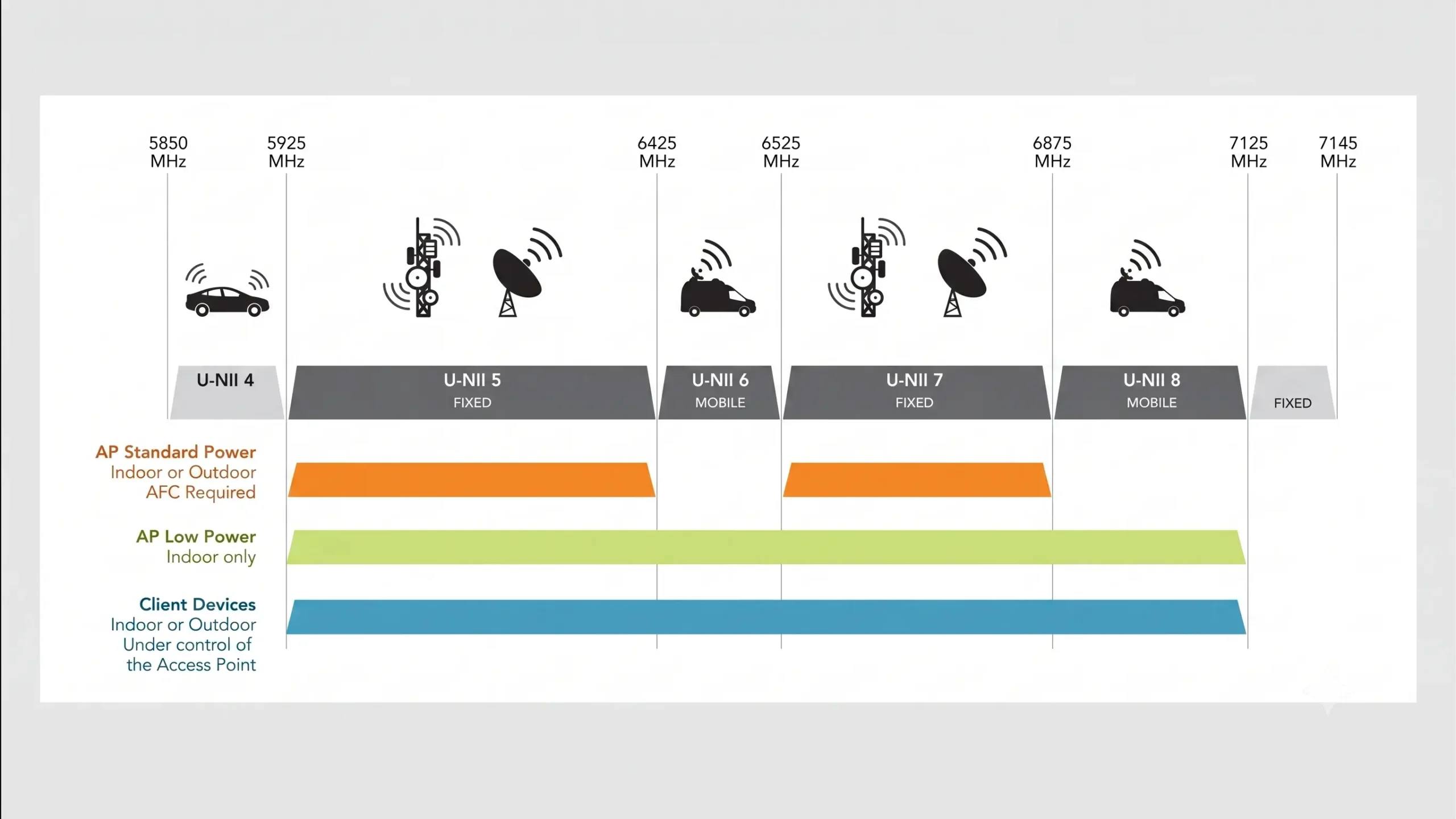
The lower 6 GHz band, the range from 5925 to 6425 MHz, has enough room to support multiple wide channels, and wide channels are what make a wireless link genuinely fast. Operators running this band overseas are delivering hundreds of megabits, sometimes even gigabits per second, to remote households using equipment you can order off the shelf today.
If you own a later-model phone or laptop, you might already be taking advantage of 6 GHz. New Zealand opened the 6 GHz band for indoor Wi-Fi in 2022, which means your home router may already be transmitting on it (if it supports Wi-Fi 6E or Wi-Fi 7). What is currently prohibited is its use outdoors at the higher power levels needed to run connections over longer distances. Say, from a tower to a house.
There is a real reason regulators are careful with this band, and it deserves to be stated plainly rather than waved away. The 6 GHz band is not completely unfilled. It carries a few dozen licensed fixed (point-to-point) microwave links and some satellite uplinks, and you cannot simply let everyone transmit and hope nobody steps on anyone. Those existing users have to be protected under law.
The answer the rest of the world has settled on is a system named Automated Frequency Coordination, or AFC. It works like a database that knows where the protected links are. Before a radio begins transmitting at outdoor power, it asks the database which channels are safe in that exact spot, and it is told which ones to leave alone. If a higher-priority user shows up later, the radio automatically finds another channel. None of this is theoretical. The United States switched it on in February 2024 after approving seven coordination providers. Canada has done the same. The United Kingdom confirmed in January this year that it was going ahead. Even Australia, the country our own regulator tends to watch most closely, is running live AFC trials right now.
So the question is no longer whether the technology works. It is in active service across several countries, and the gear is fully certified and shipping. New Zealand is now one of the few developed markets still watching from the fence.
This is the part that grates. When our regulator opened 6 GHz for indoor use in 2022, the reason it gave for not going further was that it was unclear when industry would provide an AFC system for New Zealand. That was a fair point in 2022. It is not a fair point in 2026. Several commercial AFC systems now operate overseas, and any of them could be configured for New Zealand conditions. The reason for the hold-up has, in plain terms, expired.
And yet the band still sits on the work programme under the heading of things ‘to monitor’. Not consult on. Not enable. Monitor. While it sits there, the ground beneath the small operators continues to shift. Starlink grew from 58,000 to 85,000 customers in New Zealand between 2024 and 2025, capturing more than a quarter of the rural market after four years in business. Its cheapest plan, around 79 dollars a month during the period the Commission looked at, was priced so low that established WISPs openly said they could not match it and remain solvent.
I want to be careful about how I put this, because it would be easy to read it as a shot at hard-working officials, and it is not. Spectrum regulatory work is highly technical and genuinely difficult, and the team that does it is small and stretched thin. But a small, stretched team is a resourcing decision, and resourcing decisions reflect priorities. For some years now the priority has sat elsewhere, and the cost of that has landed almost entirely on the parts of the country with the fewest options to begin with.
It is worth looking at how the same spectrum question gets handled for the larger players. The three mobile networks were handed 5G spectrum at no charge, in return for promises to extend their rural coverage. Starlink, a foreign satellite operator, pays a modest levy in proportion to its share of total industry revenue and otherwise carries a far lighter regulatory load than any local company does. The small wireless operators get neither the free spectrum nor the light touch. They carry the full cost of complying with the rules here, and have been told for five years that the one band that would let them keep pace is still under review.
There is a pattern in who ends up well served and who does not. The areas with decent connectivity tend to be those that already had an operator on the ground when the government funding rounds were announced. Good on those operators, they earned it. But it means the places that did not have the right company in the right spot at the right moment simply missed out, and now they wait for fibre to arrive on someone else’s unspecified timeline, which, for much of rural New Zealand, is years away, if it ever comes at all.
Fibre is the right answer when the houses are close enough together to justify the cost of the trench dug to reach them. For everywhere else, which is most of the country by area, the real choice is a wireless link or a satellite dish. When a local wireless operator folds or pulls a tower, that choice collapses to one: a company headquartered offshore, answering to a notoriously unpredictable owner. I do not think that is the rural broadband future anyone in Wellington actually wants. It is just the one we continue to drift into by default if nothing changes.
None of this needs a grand programme announcement or a taxpayer-funded cheque as has been the case in the past. It needs the regulator to open a consultation on standard power, outdoor use of the 5925 to 6425 MHz band under an AFC system, adopting one of the automated coordination systems already approved and in active use overseas. The same logic applies to the 3 GHz band, where the sector has been asking for another modest slice for a while. These are not radical requests. They are the business-as-usual initiatives that every comparable country has already worked through and given the green light to.
The window is now, not in a few years. The operators who could put this band to use are still here, still have customers, and still have towers standing. Leave it long enough, and that stops being true; at that point, opening the band becomes a tidy policy that arrives just too late to help the people it was meant for. We could be building up our national capability right now. The only thing missing is permission.
—